Claude wrote my friend's whole uni project in 10 minutes
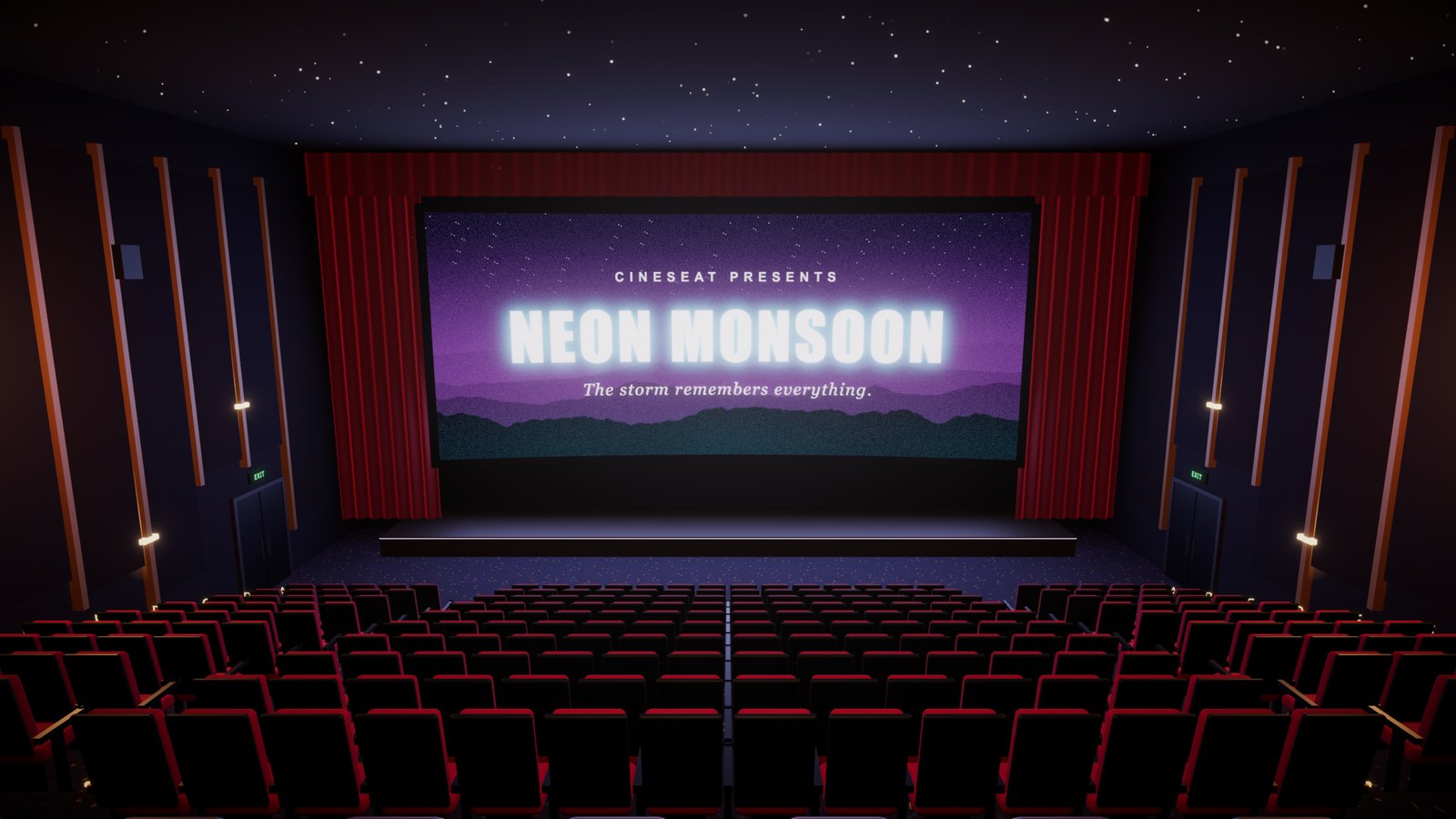
A friend needed a cinema booking system for his uni project. I handed the brief to Claude, and it wrote a full 3D cinema app where you walk the hall and sit in your seat before you book.
4 min read
A few days ago a friend asked me to build his uni project. (Quick note: I don't take on uni projects. I simply don't have the time. But he's a friend, so I said okay, send it over.)
His brief was the classic one: an online movie ticket booking system. Pick a movie, pick a showtime, pick your seats, pay. I didn't open my editor. I gave the brief to Claude with one twist: make the cinema fully 3D, so you can walk inside the hall and see the screen from your seat before you book.
Claude wrote the whole app in about 10 minutes. That's the 3D hall, the seat picker, checkout and the e-ticket, every page and every component. About half an hour later it had installed everything, run the app in a real browser, checked its own screenshots and fixed what looked wrong. Here's what it looks like:
Try it live: cinema3d-red.vercel.app. Walk the hall, sit in a seat and book a ticket yourself. It works on a phone too, but a laptop gives you the full experience.
What you're seeing in the video
Home page: a real cinema audience playing in the background, with two buttons: Book a Ticket or See the Cinema in 3D.
Orbit mode: the camera flies in from the entrance. Then you can drag to rotate around the hall, scroll to zoom and pan anywhere. It's a full 255-seat cinema with a curved 16 m screen, velvet curtains, a stage, lit aisle steps and a star ceiling.
The screen actually plays: a procedural trailer runs on the big screen and lights the room in its colours, with a projector beam and dust floating in it. You can even load your own video file and watch it on the screen.
Walk mode: first person, with WASD on a laptop or an on-screen joystick on a phone. You climb the stadium steps, squeeze between rows (you can't walk through seats), and can walk right up to the screen.
Sit in any seat: click a seat, press Sit, and the camera drops into it at eye height. You see exactly how the screen looks from there before you pay.
Book in 3D: pick seats directly in the hall. Gold means selected, grey means already booked. Each seat shows its row and price.
Checkout: your seats are held for 5 minutes with a countdown, then you pay (JazzCash, EasyPaisa or card, as a demo).
E-ticket: you get a ticket with a QR code, booking ID and your seat numbers, ready to print.
Exit doors: walk up to an EXIT and the doors swing open onto a lit corridor. Walk through and you're back on the home page.
What's under the hood
Next.js and TypeScript, styled with Tailwind
Three.js through React Three Fiber, with bloom and tone mapping for the cinema glow
Instanced seat models, so the whole hall stays smooth on a phone. Quality also drops automatically on slow devices.
A shader that draws the trailer live on the screen, and a light that copies its colour onto the room
Zustand for seats, holds and bookings, saved in the browser
All pages are static, so it deploys to Vercel's free tier as-is
Live demo: cinema3d-red.vercel.app. The source is public on GitHub: Muhammad-Adil-code/Cinema3d.
The honest part
The 10 minutes is the time it took to write the code, and the first version worked. Everything you see in the video came after that, in a few more rounds with Claude: the real audience footage on the home page, the exit doors, a matching icon set, and fixes for bugs I found while clicking around. My job was to look at it, say what felt wrong, and keep pushing.
So how capable are these models now?
This was meant to be a semester project. A student would normally spend weeks on the booking flow alone, and the 3D cinema would be the stretch goal they never reach. Here, the code for all of it took ten minutes.
So what does a uni project even test now? If a model can write this in ten minutes, what can it do in a full day of focused work, or with a real team steering it for a week? And what should the person in the loop get good at: writing code, or knowing exactly what to ask for and spotting what's wrong?
I don't have the answer yet. But I know my friend's project is done, and I've got a lot more questions than I had last week. What would you have asked Claude to build?
Building something with AI? Let's talk.
I design and ship production AI and full-stack products for US teams. See how I can help.
View all servicesJoin the newsletter
Be the first to read our articles.