Drone deliveries take off, noise and all
Amazon, Walmart, and Uber are racing to expand drone delivery networks, but faster shipping comes with trade-offs: safety risks, privacy concerns, and a new kind of neighborhood noise.
3 min read
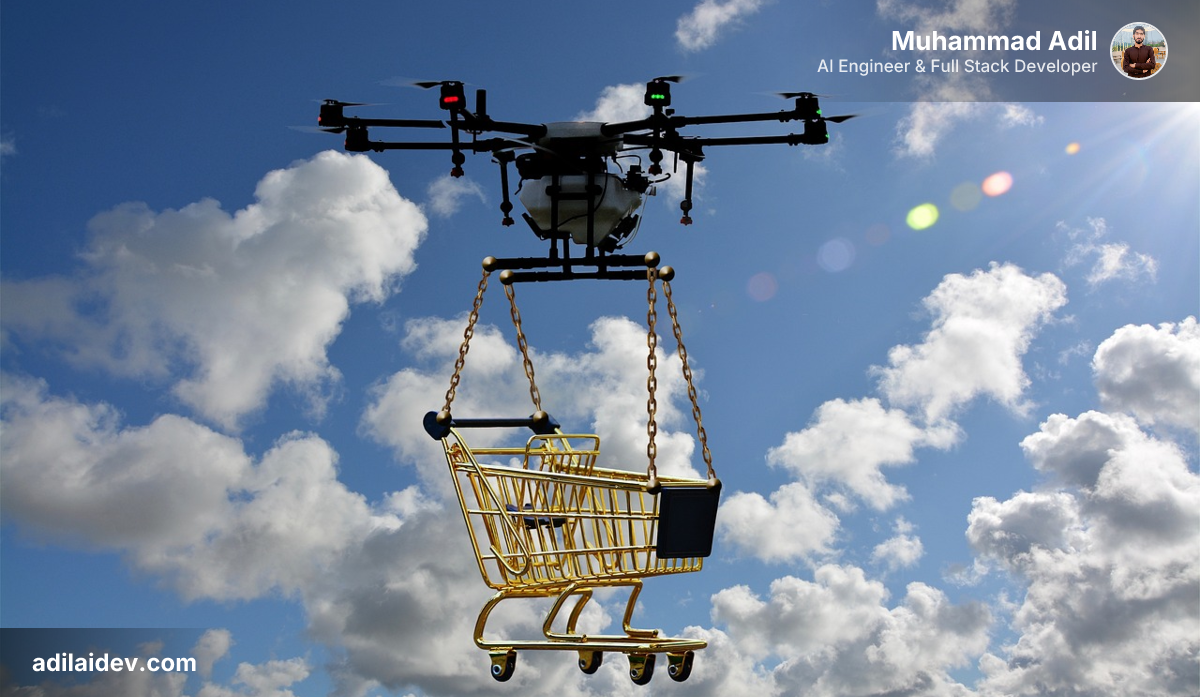
The next time you order a pack of batteries or a phone charger, it might arrive by air instead of a delivery truck. Amazon, Walmart, and even DoorDash are betting big on drones to shrink delivery times to under an hour. But as these networks grow, so do the headaches for the people living underneath their flight paths.
The expansion race
Amazon just announced plans to bring its Prime Air service to nearly 500 U.S. cities by the end of 2026, up from just 10 today. The latest rollouts include Chicago, Cleveland, and Atlanta, with each hub covering about 175 square miles. Walmart isn’t far behind, partnering with Wing and Zipline to hit 1 million deliveries already and aiming for 270 stores by 2027. Uber’s collaboration with Zipline targets a staggering 1 million daily deliveries by 2029.
For now, drones handle small, lightweight packages, think shoebox-sized items under five pounds. That limits their usefulness, but it’s enough to cover a surprising chunk of online orders. The bigger hurdle isn’t payload, though. It’s the weather. Wind, rain, and extreme temperatures can ground entire fleets, turning a 30-minute promise into a delayed delivery.
Safety records aren’t spotless
Zipline leads the pack with over 100 million miles flown and a backup parachute system that’s already saved a few errant drones. Amazon’s track record is rockier. In 2025 alone, its drones crashed into a construction crane in Arizona, took down an internet cable in Texas, and collided with an apartment building in Richardson. The FAA and NTSB are still investigating some of these incidents.
We trained our algorithms, we felt pretty good, but in the real world the performance just wasn’t good enough. That was a humbling experience.
Wing hasn’t escaped unscathed either. A drone caught fire after landing on power lines in Australia, cutting electricity to 2,000 people. Another crashed and burned in Texas earlier this year. These aren’t dealbreakers for regulators yet, but they’re a reminder that autonomous flight isn’t foolproof.
The sound of progress
Safety might grab headlines, but noise is the real sticking point for communities. Residents describe the drones as flying leaf blowers or lawnmowers hovering 20 feet overhead, sometimes dozens of times a day. Dogs bark, conversations pause, and patience wears thin.
A Michigan resident counted six flyovers in 90 minutes, comparing the noise to a small helicopter.
In Texas, drones outnumbered street traffic, altering the ambiance of homes with no opt-out option.
Privacy concerns surfaced when drones repeatedly passed over backyards, making people feel watched.
Amazon insists its drones only use cameras for navigation, not surveillance, and that no human monitors the feed. But try telling that to someone who’s had four drones buzz their backyard while sunbathing. Some residents have filed FAA complaints or asked Amazon to reroute flights, with mixed results. A protest in Richardson this June suggests patience is running out.
What’s next
The FAA’s drone noise complaints are still low compared to helicopters or planes, but that could change as operations scale. Local governments may step in if the backlash grows, forcing companies to tweak flight paths or adjust schedules. For now, the expansion continues, with drones becoming a more common sight, and sound, in American skies.
The trade-off is clear: faster deliveries for some, constant noise for others. Whether that’s a fair exchange depends on who you ask, and where they live.
Building something with AI? Let's talk.
I design and ship production AI and full-stack products for US teams. See how I can help.
View all servicesJoin the newsletter
Be the first to read our articles.